Subtotal: $1,920.00

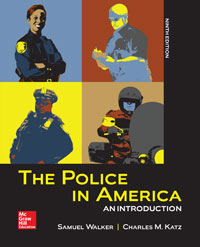
The Police in America An Introduction Samuel Walker 9e - Test Bank

The Police in America An Introduction Samuel Walker 9e - Test Bank   Instant Download - Complete Test Bank With Answers     Sample Questions Are Posted Below   Chapter 04 Police Organizations     Multiple Choice Questions American law enforcement agencies are organized along quasi-military lines. This means that A.the military may be called …

$19.99

The Police in America An Introduction Samuel Walker 9e – Test Bank


Instant Download – Complete Test Bank With Answers


Sample Questions Are Posted Below


Chapter 04

Police Organizations


Multiple Choice Questions

  1. American law enforcement agencies are organized along quasi-military lines. This means that
    A.the military may be called upon to assist the police under certain conditions.
    B. the tactics used by the police today are a direct copy of the original military strategies used in early sixteenth century.
    C. the police resemble the military in some but not all respects.
    D. the military regularly allocates surplus resources to the police.


Accessibility: Keyboard Navigation

  1. An important criticism of the quasi-military style is the
    A.potential abuse of tax funds.
    B. potential abuse of military-police authority.
    C. increase of personnel morale under false pretenses.
    D. cultivation of an “us versus them” attitude.


Accessibility: Keyboard Navigation

  1. The typical police department has a complex hierarchical structure and an authoritarian management style, which is also known as a
    A.common organization.
    B. bureaucracy.
    C. public sector.
    D. delegation orientation.


Accessibility: Keyboard Navigation


  1. Community policing is an alternative to the traditional form of policing. Its placement of greater responsibility on officers to be more responsive to neighborhood residents is an attempt to _____ more traditional organizations.
    A.decentralize
    B. deformalize
    C. despecialize
    D. delayerize


Accessibility: Keyboard Navigation

  1. A type of structure of police organizations consisting of officers from different ranks within the same agency is known as a
    A.task force.
    B. response unit.
    C. tactical response.
    D. task crime unit.


Accessibility: Keyboard Navigation

  1. The management program that uses technology as an organizational tool to achieve crime control through accountability is known as
    A.ENFORCESTAT.
    B. POLSTAT.
    C. COMPSTAT.
    D. CRIMESTAT.


Accessibility: Keyboard Navigation

  1. The guide that ensures that personnel decisions are based on objective criteria and not on favoritism, bias, or political influence is called the
    A.reward system.
    B. accountability system.
    C. civil service system.
    D. ethics appointment system.


Accessibility: Keyboard Navigation


  1. An organization legally authorized to represent police officers in collective bargaining with their employer is called a
    A.police unit.
    B. police rep unit.
    C. police agency union.
    D. police union.


Accessibility: Keyboard Navigation

  1. The method of determining conditions of employment through bilateral negotiations is known as
    A.grievance process.
    B. collective bargaining.
    C. shared working improvement.
    D. police labor movement.


Accessibility: Keyboard Navigation

  1. Within almost all police departments there are “cliques,” or informal networks of officers. What purpose does a horizontal clique serve?
    A.to protect officers from supervisory oversight and accountability
    B. to enhance conditions between patrol partners in long-term assignments
    C. to improve relations between supervisors and their staff
    D. to allow officers of the same rank to be promoted


Accessibility: Keyboard Navigation

  1. Identify the way in which the police resemble the military.
    A.The police serve a citizen population.
    B. The organizational style of the police is authoritarian.
    C. The police provide services designed to help people.
    D. The police also exercise individual discretion.


Accessibility: Keyboard Navigation


  1. Many experts believe the quasi-military style is inappropriate for the police because it
    A.encourages undemocratic activities.
    B. deemphasizes job satisfaction.
    C. encourages the philosophy of the police fighting a “war on crime.”
    D. inefficiently serves the citizen population.


Accessibility: Keyboard Navigation

  1. The degree of specialization in a police department depends on
    A.the ratio of men to women in the police department.
    B. the nature of its problems.
    C. the budget allocated for the police department.
    D. the standards set by the Communications Assistance for Law Enforcement Act (CALEA).


Accessibility: Keyboard Navigation

  1. Which of the following is a criticism of the bureaucratic form of police organization?
    A.It is unable to adapt to meet internal needs.
    B. There is excessive communications training.
    C. It is too rigid.
    D. The police are overly invasive toward the people they serve.


Accessibility: Keyboard Navigation

  1. Why are bureaucracies often accused of being too self-serving and inward looking?
    A.There is too much administrative influence.
    B. Organizational self-protection and survival are seen to take precedence over the goals of the organization.
    C. Litigation fees and insurance take precedence.
    D. There are too many policies limiting police exposure to the public.


Accessibility: Keyboard Navigation


  1. The control of police discretion and the reduction of misconduct have been achieved through bureaucratic principles using the technique called
    A.performance evaluations.
    B. citizen review.
    C. policy review.
    D. administrative rulemaking.


Accessibility: Keyboard Navigation

  1. There are two schools of thought on how to improve police organizations. The dominant school accepts the basic principles of the organization and seeks to apply them more effectively. Which of the following statements is true about this approach?
    A.This approach seeks to gain greater control of discretion through written rules.
    B. This approach seeks to use alternative decision-making procedures that operate within the existing formal structure via task forces.
    C. This approach seeks to employ community policing programs.
    D. This approach seeks to employ zero-tolerance policing programs.


Accessibility: Keyboard Navigation

  1. How does the community policing approach attempt to modify a police organization?
    A.through strict administrative rulemaking
    B. by using an authoritarian structure
    C. through debureaucratization
    D. through common goals assessments


Accessibility: Keyboard Navigation

  1. The approach to debureaucratizing police organizations, which eliminates many rules and policies that are seen to stifle creativity and problem solving, is called
    A.deformalizing.
    B. delayering.
    C. despecializing.
    D. decentralizing.


Accessibility: Keyboard Navigation


  1. How do interagency task forces address problems within the traditional police organizational structure?
    A.They allow for crime prevention.
    B. They decrease crime rate more efficiently.
    C. They lead to increased citizen satisfaction with policing efforts.
    D. They increase the likelihood that innovations will be accepted within the organization.


Accessibility: Keyboard Navigation

  1. Which of the following statements is true about multiagency task forces?
    A.They typically consist of two or more sworn officers from several participating agencies.
    B. They exclude low ranking police officers from making decisions about police policy.
    C. They create duplication of services in their surrounding communities.
    D. They reduce the amount of information that officers have at their disposal.


Accessibility: Keyboard Navigation

  1. What is one of the benefits of police departments becoming “learning organizations”?
    A.The departments are able to achieve lower crime rates.
    B. Citizen satisfaction with police efforts increases.
    C. The police are better able to address problems concerning prevention efforts.
    D. The police can develop and implement changes according to their own needs.


Accessibility: Keyboard Navigation

  1. Under COMPSTAT, how is crime control achieved?
    A.through faster response times
    B. by holding commanders accountable
    C. by increasing arrest rates
    D. by introducing crackdowns on repeat offenders


Accessibility: Keyboard Navigation


  1. What are civil service procedures?
    A.informal procedures governing office politics
    B. procedures dictating departmental policy
    C. procedures protecting government officials from scrutiny
    D. formal and legally binding procedures governing personnel decisions


Accessibility: Keyboard Navigation

  1. What is the purpose of civil service procedures?
    A.to ensure that personnel decisions are based on objective criteria
    B. to ensure that office politics do not interfere with departmental operations
    C. to allow government officials to maximize their career objectives
    D. to ensure that departmental policy is enforced equitably


Accessibility: Keyboard Navigation

  1. Which of the following is a responsibility of civil service agencies?
    A.developing strategies to involve the community in policing
    B. developing disciplinary procedures for personnel
    C. conducting training academies for new personnel
    D. developing new community policing strategies


Accessibility: Keyboard Navigation

  1. Which of the following is an outcome of civil service systems?
    A.They limit the opportunities and incentives for individual officers.
    B. They eliminate the pyramidal structure of police departments.
    C. They increase the power of police chiefs, allowing them to hire and fire personnel at will.
    D. They reduce the amount of funds available to administrators in implementing new strategies.


Accessibility: Keyboard Navigation


  1. A police union is an
    A.organization designed to inhibit the abilities of civil service agencies.
    B. industry geared toward profiting from the low job satisfaction experienced by a majority of police officers.
    C. organization legally authorized to represent police administrators in providing police officers with needed equipment.
    D. organization legally authorized to represent police officers in collective bargaining.


Accessibility: Keyboard Navigation

  1. What is collective bargaining?
    A.negotiations involved in determining conditions of employment
    B. negotiations determining lesser sentences for criminals who supply the police with information
    C. methods of determining policing strategies for various units
    D. the method used by police unions in securing large federal grants


Accessibility: Keyboard Navigation

  1. The process of collective bargaining is designed to
    A.ensure permanency of job for employees in their organizations.
    B. ensure the promotion of every intern in their organizations.
    C. allow employees to have a right to participate in negotiations over their working conditions.
    D. allow entry-level employees to determine their own recruitment and transfer policies in their organizations.


Accessibility: Keyboard Navigation

  1. What is the purpose of grievance procedures?
    A.to provide employers with a way around civil service limitations
    B. to provide officers with an avenue for expressing their concerns with policies
    C. to allow paid leave for family emergencies
    D. to provide due process in resolving appeals for contract violations


Accessibility: Keyboard Navigation


  1. Which of the following is an example of the impact of police unions?
    A.an increase in citizen involvement in police politics
    B. an increase in the funds available for grievance litigation
    C. a reduction in the power of police chiefs
    D. an increase in the power of police chiefs


Accessibility: Keyboard Navigation

  1. What happens when the police union and the management cannot agree on a contract?
    A.They move to impasse procedures.
    B. The police go on strike.
    C. A bond vote takes place to determine police benefits.
    D. The city initiates hiring procedures for new personnel.


Accessibility: Keyboard Navigation

  1. Because police strikes are highly controversial and sometimes illegal, what action do police officers usually take instead?
    A.They wait for their union to take action.
    B. There is a disruption of normally assigned duties.
    C. Patrol officers resign from the force.
    D. Officers stop responding to all calls for service.


Accessibility: Keyboard Navigation

  1. Most large police agencies engage in collective bargaining procedures. What are the findings concerning agencies that do not engage in collective bargaining?
    A.The officers of these agencies have higher job satisfaction.
    B. Officers spend more time and efforts on crime prevention.
    C. These officers are typically better paid due to the availability of funds.
    D. They typically do not receive shift differential pay or education incentive pay.


Accessibility: Keyboard Navigation


  1. What is the underlying premise of contingency theory?
    A.the idea that organizations are created and structured to achieve specific goals
    B. the belief that police organizations are social institutions
    C. the idea that police organizations are dependent on others for resources
    D. the idea that organizations are only effective under strict management


Accessibility: Keyboard Navigation

  1. Vincent believes that the organizational and operational structures of a police organization are solely determined by its political environment. He believes that powerful mayors and governors establish important laws that dictate policing norms in a community. Vincent would most likely support
    A.communism theory.
    B. safety valve theory.
    C. institutional theory.
    D. resource dependence theory.


Accessibility: Keyboard Navigation

  1. What is the premise of resource dependency theory?
    A.Organizations are most effective when decentralized.
    B. Organizations are created to meet specific goals.
    C. Organizations require social contacts.
    D. Organizations must obtain resources to survive.


Accessibility: Keyboard Navigation

  1. Robert Peel designed the London Metropolitan Police along the lines of
    A.the catholic church.
    B. the shipping bureaucracy.
    C. the East Indian Company.
    D. the military.


Accessibility: Keyboard Navigation


  1. Which of the following statements is true about the bureaucratic form of police organizations?
    A.It is the least efficient means developed for organizing and directing many different activities in the pursuit of a common goal.
    B. It eliminates all forms of hierarchy in police organizations.
    C. It enables police organizations to quickly adapt to external changes.
    D. It allows for delegation of specific tasks to lower ranking officials in police organizations.


Accessibility: Keyboard Navigation

  1. Identify an accurate statement about horizontal cliques in police organizations.
    A.They are typically formed between lower and higher ranking officers.
    B. They are least used by rank-and-file officers in an organization.
    C. They are mostly created to protect line officers from supervisory oversight and accountability.
    D. They are absent in organizations that have a bureaucratic structure.


Accessibility: Keyboard Navigation

  1. Decentralizing in policing occurs when
    A.the police place greater responsibility on rank-and-file officers at the neighborhood level to be more responsive to neighborhood residents.
    B. rules and policies that often stifle police creativity and do not encourage problem solving are eliminated.
    C. specialized units with neighborhood officers who are more knowledgeable about the problems that face their neighborhoods are established.
    D. the social and administrative distance between the beat officer and the chief of police is decreased.


Accessibility: Keyboard Navigation


  1. Rob says that the beat officers in his neighborhood are forced to consult many high ranking police officers before they make any decision because of the hierarchal system of the police department. This system makes it time-consuming for these officers and other lower-ranked police officers to take decisions in the event of an emergency. According to this scenario, which of the following should be done to improve the efficiency of policing in Rob’s neighborhood?
    A.The police department should delayerize its structure.
    B. The police department should split tasks among different officers based on their area of specialization.
    C. The police department should have a centralized structure.
    D. The police department should add more beat officers to police the neighborhood.


Accessibility: Keyboard Navigation

  1. Identify an accurate statement about despecializing in policing.
    A.The police place greater responsibility on rank-and-file officers at the neighborhood level to become more responsive to neighborhood residents.
    B. Rules and policies that often stifle police creativity and do not encourage problem solving are eliminated.
    C. Specialized units with neighborhood officers who are more knowledgeable about the problems that face their neighborhoods are established.
    D. The amount of social and administrative distance between the beat officer and the chief of police is decreased.


Accessibility: Keyboard Navigation

  1. Karen, an experienced field officer, says that her police department is able to function efficiently because police officers of different ranks in her department are allowed to experiment with innovative ideas and tactics in her neighborhood. Which of the following statements is most likely true about Karen’s police department?
    A.The police department is highly centralized.
    B. The department structure is deformalized.
    C. The department structure is technocratic.
    D. The police department is highly specialized.


Accessibility: Keyboard Navigation


  1. An organization legally authorized to represent police officers in collective bargaining with the employer is called
    A.a civil service administration.
    B. the brotherhood.
    C. a police union.
    D. an agent.


Accessibility: Keyboard Navigation

  1. The method of determining conditions of employment through bilateral negotiations is called
    A.arguing.
    B. collective bargaining.
    C. debating.
    D. conflicting.


Accessibility: Keyboard Navigation

  1. According to the text, when the union and the city cannot agree on a contract a(n) _____ exists.
    A.strike
    B. problem
    C. impasse
    D. default


Accessibility: Keyboard Navigation

  1. Police unions have had a powerful impact on American policing. Most important, they have produced significant improvements in
    A.the hiring of female officers.
    B. the hiring of minorities.
    C. police officers’ salaries and benefits.
    D. the rising educational levels of new recruits.


Accessibility: Keyboard Navigation


  1. The dominant theoretical framework for understanding the structures and practices of police organizations is
    A.police administration theory.
    B. police management theory.
    C. contingency theory.
    D. institutional theory.


Accessibility: Keyboard Navigation

  1. The belief that organizations are created and structured to achieve specific goals, such as crime control, is called
    A.police administration theory.
    B. police management theory.
    C. contingency theory.
    D. institutional theory.


Accessibility: Keyboard Navigation

  1. Which theory holds that police organizations are social institutions that operate in relation to their external social and political environment?
    A.police administration theory
    B. police management theory
    C. contingency theory
    D. institutional theory


Accessibility: Keyboard Navigation


True / False Questions

  1. Simpler organizational structures and informal management styles are more common in larger police departments than in smaller departments.
    FALSE


Accessibility: Keyboard Navigation


  1. In the history of policing, professional police departments were the ones in which police officers did their job “by the book.”
    TRUE


Accessibility: Keyboard Navigation

  1. The quasi-military style of police organization increases the morale of police officers and gives them a high degree of job satisfaction.
    FALSE


Accessibility: Keyboard Navigation

  1. According to the text, a task force consists of officers from different ranks within the same agency.
    TRUE


Accessibility: Keyboard Navigation

  1. The interagency task force approach assumes that officers at the lowest rank are incompetent to make intelligent decisions about police policy.
    FALSE


Accessibility: Keyboard Navigation

  1. The majority of sworn police officers in the United States are members of police unions.
    TRUE


Accessibility: Keyboard Navigation


  1. The oldest and largest police organization in the country is the International Union of Police Associations.
    FALSE


Accessibility: Keyboard Navigation

  1. According to the text, jobs in the police department are competitive with other jobs that may require a college education.
    TRUE


Accessibility: Keyboard Navigation

  1. Many of the problems in policing are related to organizational features.
    TRUE


Accessibility: Keyboard Navigation

  1. Friendship patterns are important in the management of a police department.
    TRUE


Accessibility: Keyboard Navigation


Essay Questions

  1. Explain the quasi-military style of police organizations.

Answer may vary


Accessibility: Keyboard Navigation


  1. How are the police different from the military?

Answer may vary


Accessibility: Keyboard Navigation

  1. What are the informal aspects of police organizations?

Answer may vary


Accessibility: Keyboard Navigation

  1. What are the major criticisms of the bureaucratic form of organization?

Answer may vary


Accessibility: Keyboard Navigation

  1. What are the five major advantages to using a multiagency task force in the investigation of gangs and drugs?

Answer may vary


Accessibility: Keyboard Navigation

Additional information

Add Review

Your email address will not be published. Required fields are marked *