Subtotal: $1,080.00

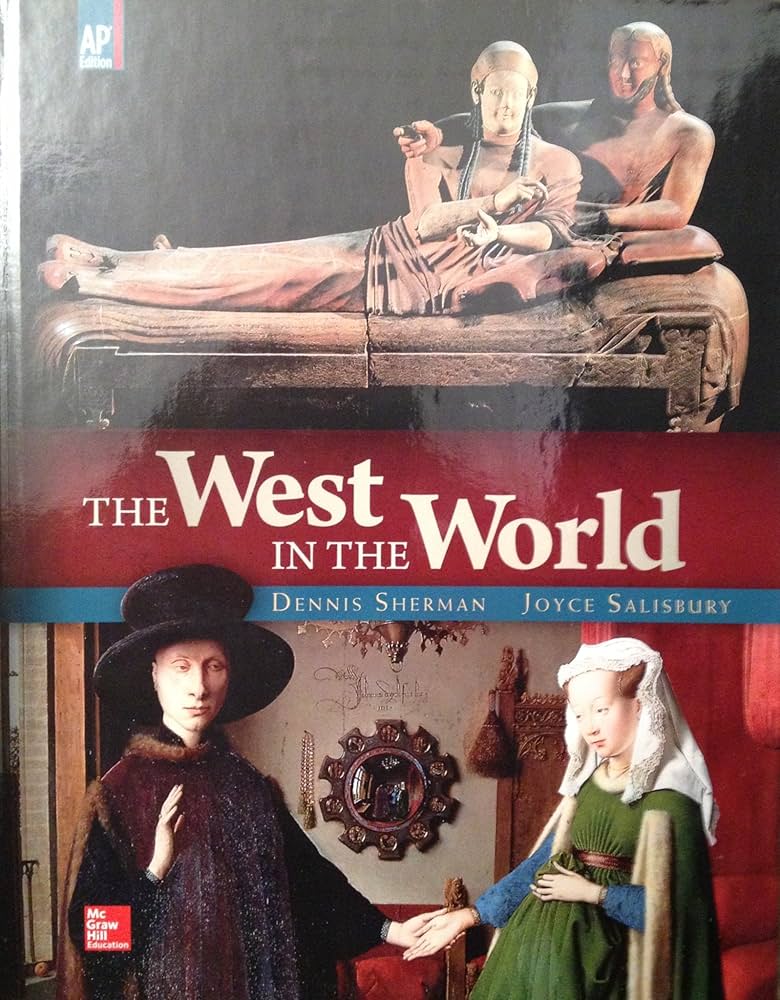
The West in The World AP Edition Dennis Sherman - Test Bank

The West in The World AP Edition Dennis Sherman - Test Bank   Instant Download - Complete Test Bank With Answers     Sample Questions Are Posted Below   Chapter 14 A New World of Reason and Reform MULTIPLE CHOICE   During the seventeenth and eighteenth centuries, which civilization(s) continued to challenge the standard assumptions …

$19.99

The West in The World AP Edition Dennis Sherman – Test Bank


Instant Download – Complete Test Bank With Answers


Sample Questions Are Posted Below


Chapter 14

A New World of Reason and Reform

MULTIPLE CHOICE


  1. During the seventeenth and eighteenth centuries, which civilization(s) continued to challenge the standard assumptions of their civilization?
  2. the Chinese and Westerners
  3. the Islamic empires and Westerners
  4. Westerners
  5. the Japanese and Chinese

Answer: C

Difficulty: Easy

Page: 426


  1. The traditional view of the universe was
  2. based on Greek science and philosophical thought.
  3. the result of the spread of ignorance stemming from the fall of the Roman Empire.
  4. the result of the spread of Chinese views of the universe in Europe.
  5. based on Persian science and philosophical thought.

Answer: A

Difficulty: Easy

Page: 426


  1. The traditional view of the universe was undermined by the
  2. Hermetic doctrine that all matter from plants to the sun contained the divine spirit.
  3. upsetting of traditional understandings of geography by the process of exploration.
  4. printing press, which permitted more ideas to be published and spread more rapidly.
  5. All these answers are correct.

Answer: D

Difficulty: Medium

Page: 427-428


  1. The religious attitude of most early scientists, unleashed by the Reformation, was
  2. that they were investigating a universe created by God.
  3. a strong skepticism caused by their scientific observations.
  4. a revived paganism caused by their admiration for classical antiquity.
  5. a growing interest in oriental philosophy.

Answer: A

Difficulty: Medium

Page: 427


  1. Nicolaus Copernicus is best known as the first
  2. scientist to reject the Hermetic tradition and Neoplatonic philosophy.
  3. person to use a telescope to observe the universe.
  4. modern thinker to posit that the earth revolved around the sun.
  5. person to publish a detailed treatise on how gravity operates.

Answer: C

Difficulty: Medium

Page: 428


  1. Copernicus’s astronomical views were
  2. ignored by contemporaries.
  3. rejected by Tycho Brahe, the greatest observational astronomer of the sixteenth century.
  4. quickly adopted by the Protestant Reformation.
  5. None of these answers is correct.

Answer: B

Difficulty: Hard

Page: 429


  1. Tycho Brahe
  2. was a French peasant who became a great astronomer.
  3. did not accept the Copernican system, and also rejected the Aristotelian belief that the heavens were composed of crystalline spheres.
  4. was the first astronomer to use a telescope.
  5. was influential in the court of the Russia.

Answer: B

Difficulty: Medium

Page: 429


  1. Johannes Kepler
  2. showed that science and religion were incompatible.
  3. rejected the Copernican hypothesis on astronomical grounds.
  4. made important astronomical observations with a telescope.
  5. offered the first real proof of the Copernican hypothesis by discovering three laws of planetary motion.

Answer: D

Difficulty: Medium

Page: 429


  1. Galileo Galilei
  2. denounced Copernicus’s astronomical ideas.
  3. achieved so much fame in science that he was elected pope.
  4. was the assistant to Copernicus.
  5. used a telescope to discover that Jupiter had moons and that the sun had spots.

Answer: D

Difficulty: Easy

Page: 429-430


  1. Galileo’s greatest contributions include his
  2. development of physical laws that overturned Aristotle’s physics.
  3. support of Neoplatonic philosophy.
  4. proof of the effects of gravity.
  5. None of these answers is correct.

Answer: A

Difficulty: Hard

Page: 429


  1. The scientist who discovered the law of universal attraction was
  2. Paracelsus.
  3. Copernicus.
  4. Newton.
  5. Einstein.

Answer: C

Difficulty: Easy

Page: 431


  1. Newton made many important scientific discoveries but is best known for his
  2. explanation of the circulation of blood.
  3. discovery of the satellites of Jupiter.
  4. discovery of how gravitation holds the universe together.
  5. invention of the microscope.

Answer: C

Difficulty: Medium

Page: 431


  1. The work of Paracelsus, Vesalius, Harvey, and Boyle demonstrated that
  2. the physics of Newton was incomplete and needed correction.
  3. by no means was the intellectual world of Europe ready to accept the Scientific Revolution.
  4. science was progressing not only in physics and astronomy but also in medicine, anatomy, and chemistry.
  5. the religious world had fully accepted the new science.

Answer: C

Difficulty: Medium

Page: 432-433


  1. “I think, therefore I am” was stated by
  2. Bacon.
  3. Galileo.
  4. Newton.
  5. Descartes.

Answer: D

Difficulty: Medium

Page: 434


  1. The importance of Francis Bacon and René Descartes in the Scientific Revolution stems from their
  2. work with Robert Boyle on the foundations of modern chemistry.
  3. ideas on observation, experimentation, and mathematics, which helped establish the methodology of science.
  4. astronomical observations, which confirmed Newton’s work.
  5. outspoken protest against the Inquisition’s condemnation of Galileo.

Answer: B

Difficulty: Medium

Page: 433-434


  1. Scientific ideas were spread in large part
  2. by private societies of scientists only.
  3. by royal and princely societies only.
  4. by a combination of private and royal societies.
  5. without any attempt to organize scientific research and dissemination.

Answer: C

Difficulty: Medium

Page: 435-436


  1. By the end of the Scientific Revolution of the sixteenth and seventeenth centuries,
  2. new technology developed by scientists had transformed European ways of life.
  3. science had claimed precedence over religion in explaining the material world.
  4. scientific progress virtually ended, not to be resumed until the middle of the nineteenth century.
  5. science was reconciled with religion.

Answer: B

Difficulty: Medium

Page: 436


  1. Enlightenment thinkers admired the psychology of John Locke, who argued that
  2. humans were subconsciously influenced by the combined forces of the ego, superego, and id.
  3. the human mind was blank at birth, and thus schools and social institutions should mold the individual from childhood to adulthood.
  4. that the human mind was highly programmed from birth, virtually negating the idea of free will.
  5. that all humans were born with an innate moral sense, so that it was unnecessary to teach morality.

Answer: B

Difficulty: Medium

Page: 437-438


  1. During the Enlightenment,
  2. there was considerably less interest in science than in the preceding century.
  3. thinkers excluded women from all scientific and philosophical discussion.
  4. writers consistently advocated violent revolution in the name of science.
  5. science was popularized in numerous books written for general audiences.

Answer: D

Difficulty: Medium

Page: 437


  1. The ideas of Pierre Bayle and David Hume demonstrated that
  2. science and religion were clearly compatible.
  3. the Enlightenment was moving in a skeptical direction, challenging scriptural authority and religious beliefs.
  4. not all Enlightenment thinkers believed in religious toleration.
  5. the best Enlightenment thinkers did not frequent the salons.

Answer: B

Difficulty: Medium

Page: 438


  1. Which of the following was NOT characteristic of the Enlightenment?
  2. a firm conviction that human reason should determine the understanding of the world and the rules of social life
  3. that it had a great amount of influence on European and American elites
  4. the popularization of science
  5. that it was dominated by Italian and Spanish thinkers

Answer: D

Difficulty: Hard

Page: 436-439


  1. The travel writings of Montesquieu and Voltaire, together with history writing that emphasized the idea of progress, showed which aspect of the Enlightenment?
  2. a broadening criticism of authority and tradition
  3. the spread of Newtonian science
  4. the adoption of John Locke’s psychology of knowledge
  5. All these answers are correct.

Answer: A

Difficulty: Hard

Page: 439


  1. According to the text, the philosophes were best represented by
  2. Voltaire.
  3. Paracelsus.
  4. Descartes.
  5. Franklin.

Answer: A

Difficulty: Medium

Page: 439


  1. By publishing his Treatise on Tolerance, Voltaire showed an affinity with the ideas of
  2. Paracelsus.
  3. Descartes.
  4. Bayle.
  5. Copernicus.

Answer: C

Difficulty: Hard

Page: 441


  1. Which of the following is NOT an idea discussed by Voltaire in his writings?
  2. the naiveté of people who believed that “this is the best of all possible worlds”
  3. complete social egalitarianism
  4. skepticism about religious doctrine
  5. upholding of religious toleration

Answer: B

Difficulty: Hard

Page: 440-441


  1. Which of the following is NOT true about the Encyclopedia?
  2. Its editors were Voltaire and Émilie du Châtelet.
  3. It placed a great deal of emphasis on science.
  4. It survived a bout with government censorship.
  5. It included a large number of illustrations.

Answer: A

Difficulty: Medium

Page: 441


  1. Thomas Paine’s statement “I believe in one God…I do not believe in the creed professed by the Jewish church, by the Roman church, by the Greek church, by the Turkish church…” is an example of Enlightenment
  2. atheism.
  3. deism.
  4. agnosticism.
  5. nominalism.

Answer: B

Difficulty: Easy

Page: 442


  1. Vindication of the Rights of Women was written by
  2. Mary Astell.
  3. Émilie du Châtelet.
  4. Mary Wollstonecraft.
  5. Christina of Sweden.

Answer: C

Difficulty: Hard

Page: 445


  1. Which of the following ideas is NOT found in John Locke’s Second Treatise on Civil Government?
  2. Natural rights include life, liberty, and property.
  3. The people have a right to overthrow a government that violates their natural rights.
  4. The powers of government are strictly limited.
  5. Monarchy is the only proper form of government.

Answer: D

Difficulty: Hard

Page: 442


  1. Jean-Jacques Rousseau’s Social Contract would remain controversial for two centuries because
  2. it denounced all religion, even deism, as superstition.
  3. its concept of the general will can be used to support both participatory democracy and an authoritarian regime.
  4. it tried to justify abortion.
  5. it advocated strict separation of the sexes.

Answer: B

Difficulty: Hard

Page: 443


  1. Which of the following thinkers is NOT properly paired with the book or idea that made him famous?
  2. Jean-Jacques Rousseau, The Spirit of the Laws
  3. Voltaire, Candide
  4. Adam Smith, Wealth of Nations
  5. Cesare Beccaria, On Crimes and Punishments

Answer: A

Difficulty: Medium

Page: 442


  1. Which of the following is NOT true about women in the Enlightenment?
  2. Émilie du Châtelet was an important aide to Voltaire.
  3. Mary Astell and Mary Wollstonecraft both emphasized female education.
  4. Immanuel Kant, Jean-Jacques Rousseau, and the editors of the Encyclopedia all argued that women should play an active political role.
  5. Julie de Lespinasse and Marie-Thérèse Geoffrin held important gatherings for Enlightenment intellectuals.

Answer: C

Difficulty: Medium

Page: 445


  1. Which statement best sums up the Scientific Revolution and the Enlightenment?
  2. Led astray by Hermetic doctrine, the men of the Scientific Revolution produced a seriously inaccurate view of society that was publicized by the Enlightenment.
  3. All the original intellectual work was done during the Scientific Revolution; the ideas of the Enlightenment were merely derivative.
  4. By deliberately trying to undermine religious belief in the name of scientific progress, early scientists paved the way for Enlightenment religious toleration.
  5. By challenging the accepted scientific wisdom, the early scientists paved the way for broader Enlightenment critiques of religion, government, and society.

Answer: D

Difficulty: Medium

Page: 447-448


TRUE/FALSE


  1. The traditional view of the earth and the universe was based on the ideas of the Greek thinkers Aristotle and Ptolemy.

Answer: True

Page: 426


  1. Neoplatonism and Hermetic doctrine helped shape Copernicus’s heliocentric views.

Answer: True

Page: 428


  1. Tycho Brahe was one of the earliest supporters of the Copernican system.

Answer: False

Page: 429


  1. Kepler demonstrated only two of the three basic laws of planetary motion.

Answer: False

Page: 429


  1. Galileo’s Dialogue on the Two Chief Systems of the World was condemned by the censors but approved by the church.

Answer: False

Page: 430


  1. Newton’s universe was infinite and had no center.

Answer: True

Page: 432


  1. Paracelsus rejected Hermeticism and astrology.

Answer: False

Page: 432


  1. Robert Boyle believed that all matter was composed of indestructible atoms.

Answer: True

Page: 433


  1. Descartes proposed a dualistic philosophy of mind (subjective thinking and experience) and body (objective matter).

Answer: True

Page: 434


  1. Princes and rulers in the seventeenth century paid no attention to the new scientific developments of the time.

Answer: False

Page: 435


  1. The Enlightenment failed to translate the complex scientific ideas of Kepler, Galileo, and Newton into language understandable by nonscientists.

Answer: False

Page: 436-437


  1. John Locke believed that the human mind at birth was filled with a large number of innate ideas.

Answer: False

Page: 437


  1. Pierre Bayle believed that all religious dogma that conflicted with natural human understanding had to be rejected.

Answer: True

Page: 438


  1. David Hume believed that neither our own existence nor the existence of God can be known for sure.

Answer: True

Page: 438-439


  1. The French philosophes wrote more plays, novels, and history than formal philosophy.

Answer: True

Page: 439


  1. The Encyclopedia surprisingly had no trouble with government censors.

Answer: False

Page: 441


  1. Montesquieu opposed the division of governmental powers into the triad of executive, legislative, and judicial.

Answer: False

Page: 442


  1. Rousseau declared that in a state of nature, the lives of people were nasty, brutish, and short.

Answer: False

Page: 442-443


  1. Rousseau’s ideas have been used to support both participatory democracy and authoritarian political systems.

Answer: True

Page: 443


  1. The Physiocrats were French economic thinkers who believed that economic prosperity rested on greater governmental control over agriculture and manufacturing.

Answer: False

Page: 443


  1. In spite of their views on individualism and education, many Enlightenment writers and thinkers seemed to believe that women should stay at home.

Answer: True

Page: 445


  1. One of the most important contributions of women to the Enlightenment was to serve as hostesses for the salons.

Answer: True

Page: 445


FILL-IN-THE-BLANK


  1. Two of the most important nonscientific philosophies that contributed to the rise of modern science were Neoplatonism and the ________ doctrine.

Answer: Hermetic

Page: 427


  1. The first systematic treatise arguing for a heliocentric system was written by ________.

Answer: Copernicus

Page: 428


  1. The most important astronomer of the late sixteenth century, though not a believer in the Copernican system, was ________.

Answer: Tycho Brahe

Page: 429


  1. ________ discovered that the orbits of planets were ellipses, not circles.

Answer: Kepler

Page: 429


  1. The first astronomer to discover spots on the sun and craters on planetary bodies through the use of a telescope was ________.

Answer: Galileo

Page: 430


  1. Newton is most famous for his discovery of the law of universal attraction, or ________.

Answer: gravitation

Page: 431


  1. ________, a Fleming living in Italy, wrote the first comprehensive textbook on anatomy.

Answer: Vesalius

Page: 432


  1. Some of the foundations of modern chemistry were laid by the seventeenth-century Irish scientist ________.

Answer: Robert Boyle

Page: 433


  1. The French philosopher who wrote, “I think, therefore I am,” was ________.

Answer: Descartes

Page: 434


  1. Important royal societies and academies for the advancement of science were created in England and ________.

Answer: France

Page: 435


  1. The English philosopher who argued that the mind was a blank slate at birth was ________.

Answer: John Locke

Page: 437-438


  1. A French Protestant who argued in favor of religious toleration was ________.

Answer: Pierre Bayle

Page: 438


  1. The Scottish philosopher who carried skeptical arguments further than John Locke and Pierre Bayle was ________.

Answer: David Hume

Page: 438


  1. Voltaire came to admire the parliamentary government and religious tolerance of ________.

Answer: England

Page: 440


  1. The term ________ is used to describe French intellectuals of the eighteenth century.

Answer: philosophes

Page: 439


  1. The ________ was a multi-volume work that emphasized both scientific and Enlightenment ideas.

Answer: Encyclopedia

Page: 441


  1. The religious beliefs of Thomas Pain are best described as ________.

Answer: deism

Page: 442


  1. Rousseau developed a controversial concept in his Social Contract but never made clear how it would operate in practice. This concept was the ________.

Answer: general will

Page: 443


  1. The economic doctrine known as ________ was developed by the Physiocrats.

Answer: laissez-faire

Page: 443


ESSAY


  1. Why should so many problems have developed between science and religion when so many of the early scientists were quite orthodox in their religious beliefs?


  1. If, as the text states, common sense apparently supported the geocentric view, why should this belief have been challenged? List two important reasons.


  1. Discuss the major contributions made by Kepler and Galileo in proving the Copernican hypothesis.


  1. Discuss the ideas of Bacon and Descartes. They seem to be presenting two different approaches to knowledge. Discuss the advantages and disadvantages of each.


  1. What were the most important contributions of Voltaire and Rousseau to the Enlightenment?


  1. Describe the Encyclopedia. Identify its purpose and some of its contents, and explain why it was so controversial.


  1. Discuss Jean-Jacques Rousseau’s ideas on the origins of society. How do his views of society and politics fit with those of Montesquieu?


  1. Describe the contributions of the Physiocrats, Adam Smith, and Cesare Beccaria to the Enlightenment.


  1. Was there a role for women in the Enlightenment? Contrast the ideas of Rousseau with those of Mary Wollstonecraft, and discuss also the importance of the hostesses of the salons.


  1. How did such events and ideas as the Reformation, the great burst of European exploration, and the Hermetic doctrine help to promote scientific discovery?


  1. Analyze the beliefs and motives of three central figures of the Scientific Revolution. What barriers and obstacles did they have to overcome?


  1. Show how and why the new theories of the universe developed, tracing their development from Copernicus through Brahe, Kepler, Galileo, and Newton.


  1. Do you think the Enlightenment merely popularized the Scientific Revolution, or did it accomplish something more?


  1. The early figures of the Scientific Revolution were all religious persons. How and why did the men of the Enlightenment use these discoveries to arrive at far more skeptical philosophical and religious conclusions?


  1. What kinds of reform—actual changes in governments and institutions—would likely flow from Enlightenment ideas?


  1. Did the Enlightenment thinkers actually change the world? Discuss the main themes of the Enlightenment and show whether each of these themes did or did not lead to some improvement.

Additional information

Add Review

Your email address will not be published. Required fields are marked *