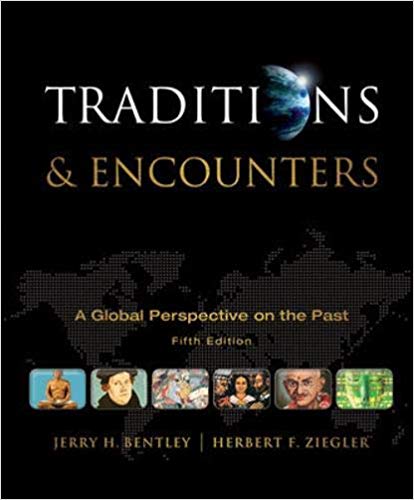
Traditions & Encounters A Global Perspective on the Past 5th Edition by Jerry Bentley - Test Bank

Traditions & Encounters A Global Perspective on the Past 5th Edition by Jerry Bentley - Test Bank   Instant Download - Complete Test Bank With Answers     Sample Questions Are Posted Below   Chapter 6 Early Societies in the Americas and Oceania     MULTIPLE CHOICE   Ritual bloodletting was crucial to Maya rituals …

$19.99

Traditions & Encounters A Global Perspective on the Past 5th Edition by Jerry Bentley – Test Bank


Instant Download – Complete Test Bank With Answers


Sample Questions Are Posted Below


Chapter 6

Early Societies in the Americas and Oceania


MULTIPLE CHOICE


  1. Ritual bloodletting was crucial to Maya rituals because
  2. it pleased their god Indra.
  3. the flow of blood terrified their enemies.
  4. it was associated with rain and agriculture.
  5. they had copied the technique from the earlier Aztecs.
  6. blood was considered taboo.

Answer: c

Page: 107


  1. The staple food of Mesoamerica was
  2. squash.
  3. beans.
  4. fish.
  5. maize.
  6. potato.

Answer: d

Page: 109


  1. Agriculture had spread through Mesoamerica by
  2. 30,000 B.C.E.
  3. 20,000 B.C.E.
  4. 10,000 B.C.E.
  5. 2000 B.C.E.
  6. 500 C.E.

Answer: d

Page: 109


  1. The first society of Mesoamerica, which founded traditions followed by all later societies, was the
  2. Maya.
  3. Olmec.
  4. Teotihuacan.
  5. Mochica.
  6. Aztec.

Answer: b

Page: 109


  1. The term Olmec means
  2. “lords.”
  3. “masters of the middle earth.”
  4. “rubber people.”
  5. “wanderers.”
  6. “noble people.”

Answer: c

Page: 110


  1. The first ceremonial center of the Olmecs was
  2. San Lorenzo.
  3. La Venta.
  4. Teotihuacan.
  5. Kaminaljuyú.
  6. Tikal.

Answer: a

Page: 110


  1. The Olmec common people
  2. labored regularly on behalf of the Olmec elite.
  3. were exclusively the subject of human sacrifice.
  4. lived alongside the elite in the major ceremonial centers.
  5. lived a much more privileged life than their European counterparts did.
  6. enjoyed a basic democracy.

Answer: a

Page: 110


  1. The most characteristic artistic creations of the Olmecs were
  2. pyramids.
  3. elaborate murals.
  4. temples.
  5. ziggurats covered with a limestone finish.
  6. colossal human heads sculpted from basalt.

Answer: e

Page: 110


  1. The Olmec ceremonial centers of San Lorenzo and La Venta were destroyed by
  2. earthquakes.
  3. the Maya.
  4. the Teotihuacan.
  5. the Olmecs themselves.
  6. volcanic eruptions that trapped the survivors and left distinctive archaeological records.

Answer: d

Page: 110


  1. The Olmecs traded extensively in all of the following items EXCEPT
  2. horses.
  3. jade.
  4. obsidian.
  5. small works of art.
  6. animal skins.

Answer: a

Page: 110


  1. All Mesoamerican societies used calendars derived ultimately from the
  2. Maya.
  3. Mochica.
  4. Olmecs.
  5. Aztecs.
  6. Incas.

Answer: c

Page: 110


  1. The first ceremonial center of the Maya was
  2. Tikal.
  3. San Lorenzo.
  4. Mochica.
  5. Kaminaljuyú.
  6. Tres Zapotes.

Answer: d

Page: 111


  1. The most important political center of the Maya realm at its height was
  2. Kaminaljuyú.
  3. Teotihuacan.
  4. Tikal.
  5. Chavín.
  6. San Lorenzo.

Answer: c

Page: 111


  1. Which of the following devices did the ancient Maya build in order to trap silt carried by the numerous rivers passing through the Mesoamerican lowlands?
  2. dams
  3. massive irrigation projects
  4. terraces
  5. primitive water purification filters
  6. moats

Answer: c

Page: 111


  1. In the ninth century C.E., a loose Maya empire was constructed by the state of
  2. Tikal.
  3. Kaminaljuyú.
  4. Chavín.
  5. Teotihuacan.
  6. Chichén Itzá.

Answer: e

Page: 112


  1. Which of the following mathematical concepts, essential for positional notation and the manipulation of large numbers, was invented by Maya mathematicians?
  2. infinity
  3. zero
  4. long division
  5. exponential notation
  6. negative numerals

Answer: b

Page: 113


  1. The Maya calendar interwove a solar year of 365 days and a ceremonial calendar of ________ days.
  2. 100
  3. 260
  4. 730
  5. 1,000
  6. 1,243

Answer: b

Page: 111


  1. The Maya believed that monumental change would occur whenever their ceremonial and solar calendars returned to their respective starting points at the same time. This event took place every ________ solar years.
  2. 10
  3. 26
  4. 52
  5. 76
  6. 88

Answer: c

Page: 113


  1. The most flexible and sophisticated system of writing found in the ancient Americas was created by the
  2. Olmecs.
  3. Maya.
  4. Teotihuacan society.
  5. Chavín cult.
  6. Incas.

Answer: b

Page: 113


  1. The Popol Vuh was the
  2. most important of the Maya gods.
  3. largest Olmec ceremonial center.
  4. Maya story of creation.
  5. greatest Austronesian epic.
  6. Olmec law code.

Answer: c

Page: 114


  1. According to the Popol Vuh, the gods created the first successful version of humans out of
  2. wood.
  3. clay.
  4. the flesh of the gods.
  5. maize.
  6. blood.

Answer: d

Page: 114


  1. How much written material survives from the Maya?
  2. a massive library at Tikal
  3. four books
  4. none
  5. a small library at the ceremonial center of Kaminaljuyú
  6. roughly a thousand books captured by the Aztecs

Answer: b

Page: 114


  1. The Pyramid of the Sun was located in
  2. Tikal.
  3. La Venta.
  4. San Lorenzo.
  5. Cuzco.
  6. Teotihuacan.

Answer: e

Page: 115


  1. The largest single building in Mesoamerica was
  2. the Maya Temple of the Giant Jaguar.
  3. the Teotihuacan Pyramid of the Sun.
  4. the Olmec Temple of the Sun.
  5. the Maya Imperial Palace.
  6. the Olmec Temple of the Moon.

Answer: b

Page: 115


  1. The population of Teotihuacan rose to
  2. 5,000.
  3. 7,500.
  4. 10,000.
  5. 12,500.
  6. 200,000.

Answer: e

Page: 115


  1. The Chavín cult
  2. was the Teotihuacan worship of an earth god and rain god.
  3. was the primary Olmec religion.
  4. produced deities with the features of humans and wild animals.
  5. was practiced in the Maya Temple of the Giant Jaguar.
  6. is the best known religion of the Americas.

Answer: c

Page: 117


  1. One of the earliest Andean states, which left a remarkable artistic legacy through its ceramics, was
  2. Chavín.
  3. Teotihuacan.
  4. San Lorenzo.
  5. Mochica.
  6. Maya.

Answer: d

Page: 118


  1. Malayan, Indonesian, Filipino, Polynesian, and other Oceanic languages are derived from
  2. aboriginal Australian.
  3. Chinese.
  4. Hindi.
  5. Indo-European.
  6. Austronesian.

Answer: e

Page: 119


  1. Which statement correctly describes the relationship between the aboriginal peoples of Australia and New Guinea?
  2. The aboriginal peoples of Australia maintained hunting and gathering societies, while in New Guinea they turned to agriculture.
  3. The two fought a centuries-long civil war.
  4. The aboriginal peoples of New Guinea maintained hunting and gathering societies, while in Australia they turned to agriculture.
  5. The aboriginal peoples of Australia learned their written language from New Guinea.
  6. The aboriginal peoples of New Guinea learned their written language from Australia.

Answer: a

Page: 119-120


  1. The Austronesian-speaking peoples became the first human settlers on which large island off the east African coast?
  2. Madagascar
  3. Sri Lanka
  4. Sicily
  5. Easter Island
  6. New Guinea

Answer: a

Page: 122


  1. The Lapita peoples
  2. spread the concept of the wheeled chariot.
  3. worshipped the Chavín cult.
  4. traded with the Mesopotamians.
  5. introduced bronze technology to China.
  6. were the earliest Austronesian migrants to establish human settlements in the Pacific Ocean.

Answer: e

Page: 122-123


  1. Austronesian peoples established what type of political societies in the lands they settled?
  2. hierarchical chiefdom
  3. theocratic
  4. matrilineal
  5. peasant-driven communal
  6. democratic

Answer: a

Page: 123


TRUE/FALSE


  1. Obsidian is the material out of which the Olmec fashioned tools.

Answer: True

Page: 110


  1. Mochica was one of the Olmec ceremonial centers.

Answer: False

Page: 110, 118


  1. The political center of the Maya between the fourth and ninth centuries C.E. was Tikal.

Answer: True

Page: 111


  1. The Chavín cult was a new religion that appeared in the central Andes around 1000 B.C.E.

Answer: True

Page: 117


  1. The Maya were a Mesoamerican society that developed writing and made advancements in math.

Answer: True

Page: 113


  1. The state of Teotihuacan was famous for its orange pottery, and it built on the Olmec calendar and graphic symbols.

Answer: True

Page: 115-116


  1. The Pyramid of the Moon was a Teotihuacan temple and largest in Mesoamerica.

Answer: False

Page: 115


  1. Mochica was one of the earliest Andean states that left a remarkable artistic legacy.

Answer: True

Page: 118


  1. Austronesians brought human settlement to islands of the Pacific Ocean.

Answer: True

Page: 121


  1. The first Mesoamerican society was the Maya.

Answer: False

Page: 109


  1. The Popol Vuh is the Maya creation myth.

Answer: True

Page: 114


ESSAY


  1. In the Popol Vuh, humans were created from maize and water. Why would this explanation have made sense to the Maya? What did the gods want from their human creations? What were the earlier attempts?


  1. In “The Voyage of Ru,” the islander Ru is described as, “a peace-loving man, but ambitious of becoming a leader, and [he] viewed with concern the quickly-increasing population of the island.” Why did Ru want to sail to new islands? Does this statement represent the real inspiration for exploration?


  1. What factors allowed for the exploration and settlement of Oceania? Did these societies change over time?


  1. What would have caused the societies of the Americas and Oceania to be so different from other societies studied so far? What areas did they have in common?


  1. In what ways could the world’s changing climate have influenced the settlements of Oceania and the Americas?


  1. Compare and contrast the political and social structures of the Americas and Oceania. Were these societies shaped differently by isolation?


  1. Examine the Popol Vuh. What can this work tell us about the religious world of the Maya? Compare it to other creation stories studied so far in the class.


  1. Explore the influence of the Olmecs on Mesoamerican society. What were the major foundations of Olmec civilization? How did they influence other societies?


  1. Discuss the richness and complexity of Maya culture, centering on their accomplishments in writing, astronomy, and math.


  1. Compare and contrast the political, social, and religious diversity of Mesoamerica and South America. How did government, social structure, and religion differ from region to region? How did they borrow from each other?


  1. What factors help explain the decline and collapse of Mesoamerican societies such as the Olmecs and the Maya? Why was the decline of the Maya so mysterious?


  1. In what fundamental ways did the Mesoamerican and South American societies differ from those of Oceania? What did they have in common?


  1. Examine the influences of the Austronesians in the history of Oceania. What factors might have driven the Austronesians to explore and colonize the Pacific Ocean?


  1. Explore the political, social, and religious diversity of Oceania. What factors allowed for these differences?


  1. Examine the relationship between Mesoamerica and South America. Why was there not more contact between the two areas?


  1. What factors help to explain the relative scarcity of information about the early history of the Americas and Oceania? What tools do historians use to study these societies?


  1. Look at Map 6.1, Early Mesoamerican societies, 1200 B.C.E.-1100 C.E. What was the geographical relationship between the Olmecs, Maya, and Teotihuacan? Were the contributions of these societies influenced by geography?


  1. Look at Map 6.2, Early societies of Andean South America, 1000 B.C.E.-700 C.E. Discuss the relationship to water of these early South American societies. Discuss the problems of communications between Mesoamerica and South America as well as within South America itself.


  1. Examine Map 6.3, Early societies of Oceania, 1500 B.C.E.-700 C.E. How were the inspirations for exploration and colonization linked to the geography of the area? Discuss the role played by the Austronesians in this process.


  1. Look at the picture of the Olmec head on page 110. How does this sculpture reflect the main contributions of the Olmecs? What was the significance of the Olmec heads? What was the significance of putting jaguar features on the Olmec ceremonial axe head on page 111?


  1. Look at the picture of Teotihuacan on page 115. How populous and powerful was this city? Discuss the importance of the Pyramid of the Sun.


  1. Examine the picture of Mochica pottery on page 118. Why would pottery like this be important to scholars as they study South America?


  1. Look at the representation of mariners on page 121. What part did these mariners and their double hulled voyaging canoes play in the exploration and colonization of Oceania? What lands did they colonize?


  1. Read the section drawn from the Popol Vuh (see Textbook: Sources from the Past: The Popol Vuh on the Creation of Human Beings). Compare this creation story to others studied in the class. Why did the gods create humans in the first place? Why would it make sense for humans to be made of maize?


  1. Read the story “The Voyage of Ru” (see Textbook: Sources from the Past: The Voyage of Ru). Why did Ru make his journey? Why did the Austronesians sail out into the Pacific Ocean? How valuable would chants and stories be as historical sources?


  1. What role did human sacrifice play in early American societies?


  1. For what were the people of the Teotihuacan culture most noted?


  1. Compare and contrast the societies that existed under the Chavín cult and the Mochica State.


  1. Describe the origins, development, and decline of the Lapita society.


Additional information

Add Review

Your email address will not be published. Required fields are marked *