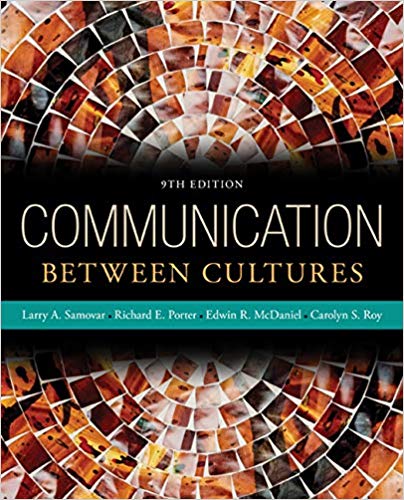
Communication Between Cultures 9th Edition by Larry A. Samovar - Test Bank

Communication Between Cultures 9th Edition by Larry A. Samovar - Test Bank   Instant Download - Complete Test Bank With Answers     Sample Questions Are Posted Below   1. What is sometimes referred to as the first multicultural nation in the world? ​   a. ​the East India Trading Company   b. ​the United States   …

$19.99

Communication Between Cultures 9th Edition by Larry A. Samovar – Test Bank


Instant Download – Complete Test Bank With Answers


Sample Questions Are Posted Below


1. What is sometimes referred to as the first multicultural nation in the world? ​

  a. ​the East India Trading Company
  b. ​the United States
  c. ​Egypt
  d. ​Rome
  e. ​Islam


ANSWER:   b


2. Which of the following was not among the chief values adopted by early settlers in the United States? ​

  a. ​individuality
  b. ​lack of formality
  c. ​efficient use of time
  d. ​limited government


ANSWER:   d


3. What concept applied in the U.S. during the 1800s was used to justify westward expansion into the “unused land” in North America? ​

  a. ​magna carta
  b. ​Louisiana purchase
  c. ​manifest destiny
  d. ​industrial revolution
  e. ​the Mexican-American War


ANSWER:   c


4. The most prominent aspect of Russia’s history is____. ​

  a. ​geography
  b. ​political heritage
  c. ​historical tradition
  d. ​the arts
  e. ​militarization


ANSWER:   a


5. Which of the following is not one of the three distinctly Russian traits identified in the text? ​

  a. ​patriotism
  b. ​Russia should play a role in world affairs
  c. ​collectivism
  d. ​state-centeredness


ANSWER:   c


6. The Tokugawa era of Japanese history was characterized by: ​

  a. ​self-imposed isolation
  b. ​near constant civil war
  c. ​conflict with China and Korea
  d. ​large scale immigration


ANSWER:   a


7. Contemporary social issues facing Japanese society include: ​

  a. ​demographic, economic, and religious changes
  b. ​demographic changes, immigration issues, and risk management
  c. ​economic changes, immigration issues, and political instability
  d. ​social and technological change, political instability
  e. ​widespread corruption, technological change, political instability


ANSWER:   b


8. India became free of British colonial rule in this year. ​

  a. ​1947
  b. ​1885
  c. ​1904
  d. ​1989
  e. ​1843


ANSWER:   a


9. Which of the following is not true about India? ​

  a. ​fifth largest economy in the world
  b. ​25% of the population live in poverty
  c. ​13% of the population is Hindu
  d. ​widespread official corruption
  e. ​lack of primary education in many Indian states


ANSWER:   c


10. Which period of history do Mexicans generally take the most pride in? ​

  a. ​modern Mexico
  b. ​the revolution
  c. ​independence from Spain
  d. ​pre-Columbian
  e. ​the Mexican-American war


ANSWER:   d


11. The Spanish invasion of Mexico began in 1519.  Approximately what percentage of the native population remained by 1650? ​

  a. ​50%
  b. ​25%
  c. ​10%
  d. ​less than 3%
  e. ​the native population was completely eradicated


ANSWER:   c


12. The Hacienda system of Mexico is best characterized by: ​

  a. ​ landed aristocrats ruling agrarian peasants
  b. ​the treaty of Guadalupe
  c. ​competition among the Olmecs, Toltecs, and Mayas
  d. ​lack of a significant class system
  e. ​religious tolerance


ANSWER:   a


13. Between 2006-2010, nearly 35,000 people have been killed as a result of ___ in Mexico. ​

  a. ​civil unrest
  b. ​narco-violence
  c. ​eco-terrorism
  d. ​official corruption
  e. ​ illegal migration


ANSWER:   b


14. Muslim’s refer to the pre-Islamic era as Jahiliya, which is roughly translated as: ​

  a. ​the age of ignorance
  b. ​the great humiliation
  c. ​before the dawn
  d. ​before the dawn
  e. ​the period of waiting


ANSWER:   a


15. The division between the beliefs of Sunni and Shiite Muslims is based on​:

  a. ​the pillars of Islam
  b. ​women’s rights
  c. ​the line of succession in Islam
  d. ​interpretations of Sharia law
  e. ​radicalization of beliefs


ANSWER:   c


16. In many cases, the word “culture” can easily be replaced with the word “history.”​

  a. True
  b. False


ANSWER:   True


17. The values of early settlers in the U.S. were a combination of selected English values as well as new beliefs, such as individuality and efficient use of time.​

  a. True
  b. False


ANSWER:   True


18. The early frontier individualism of U.S. setters commonly portrayed in the media is very accurate.​

  a. True
  b. False


ANSWER:   False


19. The philosophy used to justify aggressive western expansion in the early years of the U.S. was referred to as eminent domain.​

  a. True
  b. False


ANSWER:   False


20. Russia’s political traditional has been historically autocratic.​

  a. True
  b. False


ANSWER:   True


21. The Russian historical tradition is marked by a deep appreciation of and devotion to the arts.​

  a. True
  b. False


ANSWER:   True


22. Although it has been two decades since the collapse of Communist rule, Russia remains in transition.​

  a. True
  b. False


ANSWER:   True


23. ​A distinctly Russian value, according to Putin, is a sense of entitlement born out of historical victimization.

  a. True
  b. False


ANSWER:   False


24. The documented history of China goes back approximately 3500 years, making China the oldest, continuous civilization.

  a. True
  b. False


ANSWER:   True


25. Philosophical diversity in China gave rise to great variation in dialects and customs in China.​

  a. True
  b. False


ANSWER:   False


26. An example of China’s concern for history is reflected in the request that the Russian President and his party remove poppy pins lest they invoke images of the ‘opium wars’ between the two nations in the mid 1800s.​

  a. True
  b. False


ANSWER:   False


27. By 2025, China is anticipating 350 million people living in cities that do not exist today.

  a. True
  b. False


ANSWER:   True


28. ​Japan’s relative cultural diversity is due to the proportionately large number of immigrants in the past.

  a. True
  b. False


ANSWER:   False


29. Japan was forcibly opened to foreigners in the mid nineteenth century by Western powers.​

  a. True
  b. False


ANSWER:   True


30. During the Tokugawa period, the Japanese formed a culture where in many contexts there was a single, correct way of doing thing.

  a. True
  b. False


ANSWER:   True


31. Because of the mountainous terrain, Japanese cultural values reflect self-reliance and independence.​

  a. True
  b. False


ANSWER:   False


32. The growing presence of foreigners in Japanese society is often seen as a risk in terms of crime rates and cultural identity.​

  a. True
  b. False


ANSWER:   True


33. India’s history reflects relative cultural homogeneity.​

  a. True
  b. False


ANSWER:   False


34. India’s history reflects relative cultural homogeneity.​

  a. True
  b. False


ANSWER:   True


35. The East India Company gained power in India through “cultural seduction” and protected the welfare, economy, and culture of the indigenous people.​

  a. True
  b. False


ANSWER:   False


36. The conflict between India and Pakistan over Kashmir is rooted in the creation of separate, sovereign states.​

  a. True
  b. False


ANSWER:   True


37. Muslim and Hindu relations remain a serious problem in modern day India.​

  a. True
  b. False


ANSWER:   True


38. The proudest period in Mexican history was when independence was won from Spain.​

  a. True
  b. False


ANSWER:   False


39. Spain’s invasion of Mexico introduced Catholicism and a rigid social class system.

  a. True
  b. False


ANSWER:   True


40. Contemporary social issues in Mexico today include poverty, unemployment, and narco-violence.​

  a. True
  b. False


ANSWER:   True


41. By 2030, it is projected that Muslims will represent more than 25% of the world’s population.​

  a. True
  b. False


ANSWER:   True


42. Sunni and Shiite Muslims were historically divided on the line of succession after the death of Muhammed and the last of the Rightly Guided Caliphs.​

  a. True
  b. False


ANSWER:   True


43. Defeat of the Ottomans at the end of the First World War concluded more than 1300 years of a unified Islam, replacing it with nation-states.​

  a. True
  b. False


ANSWER:   True


44. Islamist groups are largely supported in the Arab world.

  a. True
  b. False


ANSWER:   False


45. ​Explain the importance of history to the study of intercultural communication.

ANSWER:    


46. Discuss how the early settlers of the United States contributed to the cultural values in the U.S. today.​

ANSWER:    


47. What is the doctrine of “manifest destiny” and what was its impact?​

ANSWER:    


48. How has the geography of Russia shaped its history?​

ANSWER:    


49. Describe the major events in Russia’s political history that contributed to Russian values and traits.​

ANSWER:    


50. List and describe the major social issues facing Russia today.

ANSWER:    


51. How has geography influenced Chinese culture?  List at least three examples.​

ANSWER:    


52. How have historical events of the past 200 years affected China’s worldview?​

ANSWER:    


53. What did the authors of the text mean when they wrote, “China is an example of how governments can use history as a form of communication?”

ANSWER:    


54. What are the major social issues currently facing China?​

ANSWER:    


55. What impact did geography have on Japanese history and culture? ​

ANSWER:    


56. Explain the Tokugawa era of Japan and how it is manifest in Japanese culture today.​

ANSWER:    


57. Why does Japanese culture have a collectivist orientation?​

ANSWER:    


58. Identify and explain the major social issues facing modern Japan.​

ANSWER:    


59. How did British colonialism and the East India Company influence India’s values and worldview?​

ANSWER:    


60. Explain the tensions between Hindu Nationals and Muslims in India.  What other social issues are faced in modern day India?​

ANSWER:    


61. Discuss three of the six major periods of Mexico’s history.​

ANSWER:    


62. How did Spain’s invasion of Mexico impact the indigenous people and culture?​

ANSWER:    


63. What major change did the Mexican Revolution of 1910 bring?​

ANSWER:    


64. Describe the influence of poverty, unemployment, and narco-terrorism in modern day Mexico.​

ANSWER:    


65. Who was Muhammad and the Rightly Guided Caliphs?How did Islamic civilization change after their deaths?​

ANSWER:    


66. What is the primary distinction between Sunni and Shiite Muslims?  ​

ANSWER:    


67. For modern day Muslims, how is the history of Islam reinforced?​

ANSWER:    


68. Explain the major social issues facing Islamic civilizations today.

ANSWER:    


Additional information

Add Review

Your email address will not be published. Required fields are marked *