No products in the cart.

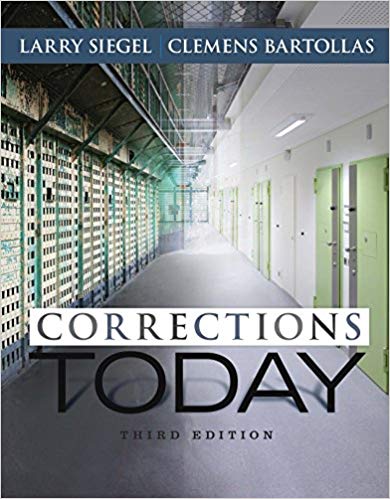
Corrections Today 3rd Edition by Larry J. Siegel - Test Bank

Corrections Today 3rd Edition by Larry J. Siegel - Test Bank   Instant Download - Complete Test Bank With Answers     Sample Questions Are Posted Below   1. What level of institution touches the lives of more individuals than any other penal institution?   a. jail b. prison   c. halfway house d. day reporting …

$19.99

Corrections Today 3rd Edition by Larry J. Siegel – Test Bank


Instant Download – Complete Test Bank With Answers


Sample Questions Are Posted Below


1. What level of institution touches the lives of more individuals than any other penal institution?

  a. jail b. prison
  c. halfway house d. day reporting center


ANSWER:   a
REFERENCES:   Contemporary Jails
LEARNING OBJECTIVES:   CORT.SIEG.16.05.01 – Describe the history and development of the jail
KEYWORDS:   Bloom’s: Remember


2. While jails in some states hold persons for only a few hours, most jails can detain people for _____ hours or longer.

  a. 8 b. 12
  c. 48 d. 72


ANSWER:   c
REFERENCES:   Contemporary Jails
LEARNING OBJECTIVES:   CORT.SIEG.16.05.01 – Describe the history and development of the jail
KEYWORDS:   Bloom’s: Remember


3. Police lockups can hold people for:

  a. 96 hours. b. less than 48 hours.
  c. 1 week. d. 72 hours.


ANSWER:   b
REFERENCES:   Contemporary Jails
LEARNING OBJECTIVES:   CORT.SIEG.16.05.01 – Describe the history and development of the jail
KEYWORDS:   Bloom’s: Remember


4. Which colony became the model for jails?

  a. Georgia b. Maryland
  c. Pennsylvania d. Virginia


ANSWER:   c
REFERENCES:   Contemporary Jails
LEARNING OBJECTIVES:   CORT.SIEG.16.05.01 – Describe the history and development of the jail
KEYWORDS:   Bloom’s: Remember


5. The initial step when admitted to jail is:

  a. receiving housing assignment. b. classification.
  c. booking. d. risk assessment.


ANSWER:   c
REFERENCES:   Contemporary Jails
LEARNING OBJECTIVES:   CORT.SIEG.16.05.01 – Describe the history and development of the jail
KEYWORDS:   Bloom’s: Remember


6. The jail system originated in:

  a. France. b. Germany.
  c. Russia. d. England.


ANSWER:   d
REFERENCES:   Contemporary Jails
LEARNING OBJECTIVES:   CORT.SIEG.16.05.01 – Describe the history and development of the jail
KEYWORDS:   Bloom’s: Remember


7. In the colonial era, instead of cells, inmate housing took the form of:

  a. large dormitories. b. private homes.
  c. small rooms. d. no inside shelters.


ANSWER:   c
REFERENCES:   Contemporary Jails
LEARNING OBJECTIVES:   CORT.SIEG.16.05.01 – Describe the history and development of the jail
KEYWORDS:   Bloom’s: Remember


8. The first state to establish a jail was:

  a. Virginia. b. Maryland.
  c. New York. d. Georgia.


ANSWER:   a
REFERENCES:   Contemporary Jails
LEARNING OBJECTIVES:   CORT.SIEG.16.05.01 – Describe the history and development of the jail
KEYWORDS:   Bloom’s: Remember


9. The contemporary jail is usually under the authority of the:

  a. mayor. b. warden.
  c. local council. d. sheriff.


ANSWER:   d
REFERENCES:   Contemporary Jails
LEARNING OBJECTIVES:   CORT.SIEG.16.05.01 – Describe the history and development of the jail
KEYWORDS:   Bloom’s: Remember


10. Today, most jails have approximately ___ beds.

  a. 1 to 49 b. 50 to 249
  c. 250 to 999 d. more than 1,000


ANSWER:   a
REFERENCES:   Jail Populations
LEARNING OBJECTIVES:   CORT.SIEG.16.05.02 – Identify the makeup of the jail population
KEYWORDS:   Bloom’s: Remember


11. During the past decade, jail populations saw a steady increase. In the last few years the trend has:

  a. stabilized and then depicted an increase again.

b. remained static.
  c. stabilized and even decreased.

d. doubled.


ANSWER:   c
REFERENCES:   Jail Populations
LEARNING OBJECTIVES:   CORT.SIEG.16.05.02 – Identify the makeup of the jail population
KEYWORDS:   Bloom’s: Remember


12. ​The number of juveniles held in jails has declined primarily because of the _________________, which grants federal money to cities and states that agree not to confine juveniles in jail.

  a. Violence Against Women Act

b. Juvenile Justice and Delinquency Prevention Act

  c. Juvenile Restorative Justice Act

d. Juvenile Justice Reentry Reformation Act


ANSWER:   b
REFERENCES:   Jail Populations
LEARNING OBJECTIVES:   CORT.SIEG.16.05.02 – Identify the makeup of the jail population
KEYWORDS:   Bloom’s: Remember


13. Largely due to increased security risks, the number of juveniles held in adult jails has:

  a. increased. b. decreased.
  c. doubled. d. remained the same.


ANSWER:   b
REFERENCES:   Jail Populations
LEARNING OBJECTIVES:   CORT.SIEG.16.05.02 – Identify the makeup of the jail population
KEYWORDS:   Bloom’s: Remember


14. The number of elderly jail inmates during the last decade has:

  a. decreased. b. remained the same.
  c. tripled. d. doubled.


ANSWER:   d
REFERENCES:   Jail Populations
LEARNING OBJECTIVES:   CORT.SIEG.16.05.02 – Identify the makeup of the jail population
KEYWORDS:   Bloom’s: Remember


15. Despite the increase in incarcerated female offenders, nearly _____ out of 10 jail inmates are adult males.

  a. 9 b. 6
  c. 5 d. 4


ANSWER:   a
REFERENCES:   Jail Populations
LEARNING OBJECTIVES:   CORT.SIEG.16.05.02 – Identify the makeup of the jail population
KEYWORDS:   Bloom’s: Remember


16. The social class overrepresented in the nation’s jails is the:

  a. wealthy. b. middle class.
  c. upper middle class. d. poor.


ANSWER:   d
REFERENCES:   Jail Populations
LEARNING OBJECTIVES:   CORT.SIEG.16.05.02 – Identify the makeup of the jail population
KEYWORDS:   Bloom’s: Remember


17. ​John Irwin refers to disorderly and disorganized jail inmates as:

  a. ​rabble. b. ​incivilities.
  c. ​perceived risks. d. ​hoopies.


ANSWER:   a
REFERENCES:   Jail Populations
LEARNING OBJECTIVES:   CORT.SIEG.16.05.02 – Identify the makeup of the jail population
KEYWORDS:   Bloom’s: Remember


18. Blacks are approximately ___ times more likely than Hispanics and ___ times more likely than whites to be in jail.

  a. 2, 3 b. 3, 5
  c. 3, 10 d. 5, 15


ANSWER:   b
REFERENCES:   Jail Populations
LEARNING OBJECTIVES:   CORT.SIEG.16.05.02 – Identify the makeup of the jail population
KEYWORDS:   Bloom’s: Remember


19. The alternatives to local control of jails are:

  a. state-run jails. b. regional arrangements.
  c. state-subsidized programs. d. all of these choices.


ANSWER:   d
REFERENCES:   Jail Administration and Structure
LEARNING OBJECTIVES:   CORT.SIEG.16.05.03 – Discuss jail administration and structure
KEYWORDS:   Bloom’s: Remember


20. Linear/intermittent surveillance is a characteristic of:

  a. second-generation jail. b. new-generation jail.
  c. first-generation jail. d. privatization.


ANSWER:   c
REFERENCES:   Types of Jail Supervision and Surveillance
LEARNING OBJECTIVES:   CORT.SIEG.16.05.04 – Compare the new-generation jail with more traditional jails
KEYWORDS:   Bloom’s: Remember


21. The indirect or podular/remote surveillance is a characteristic of:

  a. second-generation jail. b. privatization.
  c. new-generation jail. d. first-generation jail.


ANSWER:   a
REFERENCES:   Types of Jail Supervision and Surveillance
LEARNING OBJECTIVES:   CORT.SIEG.16.05.04 – Compare the new-generation jail with more traditional jails
KEYWORDS:   Bloom’s: Remember


22. Direct or podular/direct supervision is a characteristic of:

  a. first-generation jail. b. new-generation jail.
  c. privatization. d. second-generation jail.


ANSWER:   b
REFERENCES:   Types of Jail Supervision and Surveillance
LEARNING OBJECTIVES:   CORT.SIEG.16.05.04 – Compare the new-generation jail with more traditional jails
KEYWORDS:   Bloom’s: Remember


23. Which jail complies with the Prison Rape Elimination Act in that it establishes a zero-tolerance standard for the incidence of prison rape in U.S. prisons?

  a. first-generation jail b. second-generation jail
  c. new-generation jail d. fourth-generation jail


ANSWER:   d
REFERENCES:   Types of Jail Supervision and Surveillance
LEARNING OBJECTIVES:   CORT.SIEG.16.05.04 – Compare the new-generation jail with more traditional jails
KEYWORDS:   Bloom’s: Remember


24. It is difficult for small jails to develop a variety of programs because they lack:

  a. space. b. staff.
  c. fiscal resources. d. all of these choices.


ANSWER:   d
REFERENCES:   Jail Programs
LEARNING OBJECTIVES:   CORT.SIEG.16.05.05 – Describe jail-based treatment programs
KEYWORDS:   Bloom’s: Remember


25. Jails are constitutionally mandated to make available:

  a. adequate health care.
  b. drug and alcohol treatment programs.
  c. jail industries.
  d. work release.


ANSWER:   a
REFERENCES:   Jail Programs
LEARNING OBJECTIVES:   CORT.SIEG.16.05.05 – Describe jail-based treatment programs
KEYWORDS:   Bloom’s: Remember


26. Jails have even fewer alternatives for dealing with the issue of _______ than prisons.

  a. overcrowding b. privatization
  c. costs d. drugs


ANSWER:   a
REFERENCES:   Jail Officers
LEARNING OBJECTIVES:   CORT.SIEG.16.05.06 – Recognize the legal and administrative issues of jail confinement
KEYWORDS:   Bloom’s: Remember


27. ​Jail suicide rates are _________ that of the general population.

  a. ​double b. ​triple
  c. ​one-fourth d. ​half


ANSWER:   a
REFERENCES:   Jail Officers
LEARNING OBJECTIVES:   CORT.SIEG.16.05.06 – Recognize the legal and administrative issues of jail confinement
KEYWORDS:   Bloom’s: Remember


28. Jail officers’ lack of knowledge for appropriate intervention strategies poses a problem when dealing with the:

  a. funding units. b. administrators.
  c. mentally ill. d. inmates’ visitors.


ANSWER:   c
REFERENCES:   Jail Officers
LEARNING OBJECTIVES:   CORT.SIEG.16.05.06 – Recognize the legal and administrative issues of jail confinement
KEYWORDS:   Bloom’s: Remember


29. One of the major issues for jail administrators that often involve both inmates and staff, especially in large urban areas, is:

  a. work programs. b. violence.
  c. education. d. privatizing services.


ANSWER:   b
REFERENCES:   Jail Officers
LEARNING OBJECTIVES:   CORT.SIEG.16.05.06 – Recognize the legal and administrative issues of jail confinement
KEYWORDS:   Bloom’s: Remember


30. Keeping track of inmates visually within the jail often involves using physiological or behavioral characteristics of the inmate known as ________ technology.

  a. DNA analytical b. ultrasonic
  c. webcast d. biometric


ANSWER:   d
REFERENCES:   Jail Officers
LEARNING OBJECTIVES:   CORT.SIEG.16.05.06 – Recognize the legal and administrative issues of jail confinement
KEYWORDS:   Bloom’s: Remember


31. In recent years, seven states have enacted legislation that transfer control of local jails to:

  a. ​state government. b. ​federal government.
  c. ​local police agencies. d. ​state police agencies.


ANSWER:   a
REFERENCES:   Trends Shaping the Jail
LEARNING OBJECTIVES:   CORT.SIEG.16.05.07 – Discuss the future trends of jail
KEYWORDS:   Bloom’s: Remember


32. Pennsylvania established the first colonial jail, but it was the Virginia jails established by reformer Virginia Dare in the 17th century that later became the model for other states.

  a. True
  b. False


ANSWER:   False
REFERENCES:   Origins of the Jail
LEARNING OBJECTIVES:   CORT.SIEG.16.05.01 – Describe the history and development of the jail
KEYWORDS:   Bloom’s: Remember


33. ​A fee system was also used in the colonies in which inmates were required to pay for their own food and services, including wood and coal for heat.

  a. True
  b. False


ANSWER:   True
REFERENCES:   Origins of the Jail
LEARNING OBJECTIVES:   CORT.SIEG.16.05.01 – Describe the history and development of the jail


34. ​At the beginning of the 19th century, children, debtors, slaves, the mentally ill, and the physically ill were housed in jails, but as the century progressed, children and the mentally ill were more often sent to other institutions.

  a. True
  b. False


ANSWER:   True
REFERENCES:   Origins of the Jail
LEARNING OBJECTIVES:   CORT.SIEG.16.05.01 – Describe the history and development of the jail
KEYWORDS:   Bloom’s: Remember


35. ​In 1773, the Walnut Street Jail was constructed in Philadelphia in which prisoners were employed in hard labor in the institution and released during the day to repair and clean streets and highways.

  a. True
  b. False


ANSWER:   True
REFERENCES:   Origins of the Jail
LEARNING OBJECTIVES:   CORT.SIEG.16.05.01 – Describe the history and development of the jail
KEYWORDS:   Bloom’s: Remember


36. ​The concept of the English jail was brought to Britain’s colonies in North America soon after the settlers arrived from the Old World.

  a. True
  b. False


ANSWER:   True
REFERENCES:   Origins of the Jail
LEARNING OBJECTIVES:   CORT.SIEG.16.05.01 – Describe the history and development of the jail
KEYWORDS:   Bloom’s: Remember


37. Police lockups can hold persons for periods for up to 72 hours.

  a. True
  b. False


ANSWER:   False
REFERENCES:   Contemporary Jails
LEARNING OBJECTIVES:   CORT.SIEG.16.05.01 – Describe the history and development of the jail
KEYWORDS:   Bloom’s: Remember


38. The initial step for offenders in the incarceration process is to be placed in a housing unit.

  a. True
  b. False


ANSWER:   False
REFERENCES:   Contemporary Jails
LEARNING OBJECTIVES:   CORT.SIEG.16.05.01 – Describe the history and development of the jail
KEYWORDS:   Bloom’s: Remember


39. Detox and suicide prevention are problems to be identified as part of the classification process.

  a. True
  b. False


ANSWER:   True
REFERENCES:   Contemporary Jails
LEARNING OBJECTIVES:   CORT.SIEG.16.05.01 – Describe the history and development of the jail
KEYWORDS:   Bloom’s: Remember


40. Male inmates far outnumber females, though the disparity is narrowing somewhat.

  a. True
  b. False


ANSWER:   True
REFERENCES:   Jail Populations
LEARNING OBJECTIVES:   CORT.SIEG.16.05.02 – Identify the makeup of the jail population
KEYWORDS:   Bloom’s: Remember


41. As prisons become more overcrowded, correctional officials use local jails to house inmates when there is no room in state prisons.

  a. True
  b. False


ANSWER:   True
REFERENCES:   Jail Populations
LEARNING OBJECTIVES:   CORT.SIEG.16.05.02 – Identify the makeup of the jail population
KEYWORDS:   Bloom’s: Remember


42. ​Despite bail reform efforts, the poor are still the group least likely to make bail.

  a. True
  b. False


ANSWER:   True
REFERENCES:   Jail Populations
LEARNING OBJECTIVES:   CORT.SIEG.16.05.02 – Identify the makeup of the jail population
KEYWORDS:   Bloom’s: Remember


43. ​African American and Hispanic females are less likely to receive jail sentences than are white female inmates.

  a. True
  b. False


ANSWER:   False
REFERENCES:   Jail Populations
LEARNING OBJECTIVES:   CORT.SIEG.16.05.02 – Identify the makeup of the jail population
KEYWORDS:   Bloom’s: Remember


44. ​While African Americans and whites make up the great bulk of the jail population, American Indians are held in local jails at the highest rate of any racial group.

  a. True
  b. False


ANSWER:   True
REFERENCES:   Jail Populations
LEARNING OBJECTIVES:   CORT.SIEG.16.05.02 – Identify the makeup of the jail population
KEYWORDS:   Bloom’s: Remember


45. ​John Irwin refers to disorderly and disorganized jail inmates as “rabble” and contends that the jail was invented and continues to be operated in order to manage society’s rabble.

  a. True
  b. False


ANSWER:   True
REFERENCES:   Jail Populations
LEARNING OBJECTIVES:   CORT.SIEG.16.05.02 – Identify the makeup of the jail population
KEYWORDS:   Bloom’s: Remember


46. ​The population of elderly jail inmates has more than doubled in size during the past decade.

  a. True
  b. False


ANSWER:   True
REFERENCES:   Jail Populations
LEARNING OBJECTIVES:   CORT.SIEG.16.05.02 – Identify the makeup of the jail population
KEYWORDS:   Bloom’s: Remember


47. ​A major problem of jail administration is that sheriffs are politically accountable to county voters, so jails are one of the most political institutions in adult corrections.

  a. True
  b. False


ANSWER:   True
REFERENCES:   Jail Administration and Structure
LEARNING OBJECTIVES:   CORT.SIEG.16.05.03 – Discuss jail administration and structure
KEYWORDS:   Bloom’s: Remember


48. ​Transportation problems, multijurisdiction funding problems, and turf disputes limit or prohibit the even wider use of regional jails.

  a. True
  b. False


ANSWER:   True
REFERENCES:   Jail Administration and Structure
LEARNING OBJECTIVES:   CORT.SIEG.16.05.03 – Discuss jail administration and structure
KEYWORDS:   Bloom’s: Remember


49. First-generation jails are designed to provide indirect or podular/remote surveillance.

  a. True
  b. False


ANSWER:   False
REFERENCES:   Types of Jail Supervision and Surveillance
LEARNING OBJECTIVES:   CORT.SIEG.16.05.04 – Compare the new-generation jail with more traditional jails
KEYWORDS:   Bloom’s: Remember


50. ​The weakness of first-generation designed jails is found in the inability of staff to see more than one or two cells at a time.

  a. True
  b. False


ANSWER:   True
REFERENCES:   Types of Jail Supervision and Surveillance
LEARNING OBJECTIVES:   CORT.SIEG.16.05.04 – Compare the new-generation jail with more traditional jails
KEYWORDS:   Bloom’s: Remember


51. ​Management in first-generation jails assumes that they hold violent inmates who express their rage by victimizing each other, assaulting staff members, destroying property, and attempting to escape.

  a. True
  b. False


ANSWER:   True
REFERENCES:   Types of Jail Supervision and Surveillance
LEARNING OBJECTIVES:   CORT.SIEG.16.05.04 – Compare the new-generation jail with more traditional jails
KEYWORDS:   Bloom’s: Remember


52. Second-generation jails comply with the Prison Rape Elimination Act in that they establish a zero-tolerance standard for the incidence of prison rape in U.S. prisons.

  a. True
  b. False


ANSWER:   False
REFERENCES:   Types of Jail Supervision and Surveillance
LEARNING OBJECTIVES:   CORT.SIEG.16.05.04 – Compare the new-generation jail with more traditional jails
KEYWORDS:   Bloom’s: Remember


53. ​Direct-supervision (DS) jails place the correctional officers’ station within the inmates’ living area, or pod, which means the officer can see and speak to inmates.

  a. True
  b. False


ANSWER:   True
REFERENCES:   Types of Jail Supervision and Surveillance
LEARNING OBJECTIVES:   CORT.SIEG.16.05.04 – Compare the new-generation jail with more traditional jails
KEYWORDS:   Bloom’s: Remember


54. Jails are constitutionally mandated to make available adequate health care delivery systems.

  a. True
  b. False


ANSWER:   True
REFERENCES:   Jail Programs
LEARNING OBJECTIVES:   CORT.SIEG.16.05.05 – Describe jail-based treatment programs
KEYWORDS:   Bloom’s: Remember


55. Women comprise one-third of all jail employees.

  a. True
  b. False


ANSWER:   True
REFERENCES:   Jail Officers
LEARNING OBJECTIVES:   CORT.SIEG.16.05.05 – Describe jail-based treatment programs
KEYWORDS:   Bloom’s: Remember


56. Biometrics is the use of carpentry skills training for jail inmates in order to increase employment placement upon release. ​

  a. True
  b. False


ANSWER:   False
REFERENCES:   Jail Officers
LEARNING OBJECTIVES:   CORT.SIEG.16.05.06 – Recognize the legal and administrative issues of jail confinement
KEYWORDS:   Bloom’s: Remember


57. Jail officers are adequately trained to deal appropriately with mentally ill prisoners.

  a. True
  b. False


ANSWER:   False
REFERENCES:   Jail Officers
LEARNING OBJECTIVES:   CORT.SIEG.16.05.06 – Recognize the legal and administrative issues of jail confinement
KEYWORDS:   Bloom’s: Remember


58. The first colony to institute a jail was _______________​.

ANSWER:   Virginia ​
REFERENCES:   Origins of the Jail
LEARNING OBJECTIVES:   CORT.SIEG.16.05.01 – Describe the history and development of the jail
KEYWORDS:   Bloom’s: Remember


59. ​In New Hampshire and Massachusetts, a ________________ holds convicted misdemeanants and a county jail holds pretrial detainees.

ANSWER:   house of corrections ​
REFERENCES:   Origins of the Jail
LEARNING OBJECTIVES:   CORT.SIEG.16.05.01 – Describe the history and development of the jail
KEYWORDS:   Bloom’s: Remember


60. After an arrest, an individual is taken to jail to first go through____________________.

ANSWER:   booking
REFERENCES:   Contemporary Jails
LEARNING OBJECTIVES:   CORT.SIEG.16.05.01 – Describe the history and development of the jail
KEYWORDS:   Bloom’s: Remember


61. The number of juveniles held in jails has declined primarily because of the ____________________.

ANSWER:   Juvenile Justice and Delinquency Prevention Act
REFERENCES:   Jail Populations
LEARNING OBJECTIVES:   CORT.SIEG.16.05.02 – Identify the makeup of the jail population
KEYWORDS:   Bloom’s: Remember


62. Criminologist John Irwin refers to disorderly and disorganized persons as _______________.

ANSWER:   rabble
REFERENCES:   Jail Populations
LEARNING OBJECTIVES:   CORT.SIEG.16.05.02 – Identify the makeup of the jail population
KEYWORDS:   Bloom’s: Remember


63. In more than 3,000 counties in the United States, the ______________ runs the jail.

ANSWER:   sheriff
REFERENCES:   Jail Administration and Structure
LEARNING OBJECTIVES:   CORT.SIEG.16.05.03 – Discuss jail administration and structure
KEYWORDS:   Bloom’s: Remember


64. An arrangement when a jurisdiction with an adequate jail is willing to contract with neighboring cities and counties to house prisoners on a per diem basis is known as __________________________.

ANSWER:   cooperative (regional) arrangements
REFERENCES:   Jail Administration and Structure
LEARNING OBJECTIVES:   CORT.SIEG.16.05.03 – Discuss jail administration and structure
KEYWORDS:   Bloom’s: Remember


65. _________________ ​jails offer many advantages, including effective supervision of inmates, improved communication between staff and inmates, safety of staff and inmates, and improved classification and orientation of inmates.

ANSWER:   Direct-supervision ​
REFERENCES:   Types of Jail Supervision and Surveillance
LEARNING OBJECTIVES:   CORT.SIEG.16.05.04 – Compare the new-generation jail with more traditional jails
KEYWORDS:   Bloom’s: Remember


66. ​This act, _______________, is dedicated to collecting national prison rape statistics, data, and conducting research; disseminating information and procedures for combating prison rape; and assisting in funding state programs.

ANSWER:   the Prison Rape Elimination Act ​
REFERENCES:   Types of Jail Supervision and Surveillance
LEARNING OBJECTIVES:   CORT.SIEG.16.05.04 – Compare the new-generation jail with more traditional jails
KEYWORDS:   Bloom’s: Remember


67. ____________________ jails provide linear/intermittent surveillance of inmates.

ANSWER:   First-generation
REFERENCES:   Types of Jail Supervision and Surveillance
LEARNING OBJECTIVES:   CORT.SIEG.16.05.04 – Compare the new-generation jail with more traditional jails
KEYWORDS:   Bloom’s: Remember


68. ____________________jails provide indirect or podular/remote surveillance.

ANSWER:   Second-generation
REFERENCES:   Types of Jail Supervision and Surveillance
LEARNING OBJECTIVES:   CORT.SIEG.16.05.04 – Compare the new-generation jail with more traditional jails
KEYWORDS:   Bloom’s: Remember


69. ​An ___________________ is an incarceration facility that has a centrally placed, high-strength, mirrored-glass control center with a panoramic view that provides 100 percent surveillance of the entire facility.

ANSWER:   omniview ​total supervision
REFERENCES:   Types of Jail Supervision and Surveillance
LEARNING OBJECTIVES:   CORT.SIEG.16.05.04 – Compare the new-generation jail with more traditional jails
KEYWORDS:   Bloom’s: Remember


70. The new-generation jails are based on the ____________________model.

ANSWER:   direct-supervision
REFERENCES:   Types of Jail Supervision and Surveillance
LEARNING OBJECTIVES:   CORT.SIEG.16.05.04 – Compare the new-generation jail with more traditional jails
KEYWORDS:   Bloom’s: Remember


71. If inmates are considered a high risk for suicide, they may be monitored with ___________________, in which inmates are placed in specially equipped cells and in which there is frequent supervision.

ANSWER:   suicide watch programs
REFERENCES:   Jail Officers
LEARNING OBJECTIVES:   CORT.SIEG.16.05.06 – Recognize the legal and administrative issues of jail confinement
KEYWORDS:   Bloom’s: Remember


72. A new method of tracking inmates by utilizing physiological or behavioral characteristics in a three-step process is known as ____________________ technology.

ANSWER:   biometric
REFERENCES:   Jail Officers
LEARNING OBJECTIVES:   CORT.SIEG.16.05.06 – Recognize the legal and administrative issues of jail confinement
KEYWORDS:   Bloom’s: Remember


73. What are the three different types of local correctional institutions?

ANSWER:   Jails detain individuals for 48 hours or longer. These hold those awaiting trial and those who have been convicted. Lockups hold individuals for less than 48 hours at temporary holding facilities, usually at police stations. Workhouses and houses of corrections, which are usually county prisons, hold convicted inmates for short terms.
REFERENCES:   Contemporary Jails
LEARNING OBJECTIVES:   CORT.SIEG.16.05.01 – Describe the history and development of the jail
KEYWORDS:   Bloom’s: Understand


74. Discuss the historical origins of the jail in what would become the United States.

ANSWER:   Most trends and philosophical ideas associated with jails were established based on practices developed years prior in England. While the rich were able to “afford” prison, often paying for their own meals, clothes, and heat, poor and indigent individuals often starved or froze to death in early colonial jails. What is known of the modern-day jail most likely can be contributed in the colonies to the work of William Penn and the state of Pennsylvania, where one of the first corrections institutions, the Walnut Street Jail, was established in Philadelphia in the late 1790s. From this point on, the establishment of the correctional system, such as the construction of prisons, the mode of punishment, and correctional philosophies, began.
REFERENCES:   Origins of the Jail
LEARNING OBJECTIVES:   CORT.SIEG.16.05.01 – Describe the history and development of the jail
KEYWORDS:   Bloom’s: Understand


75. What occurs during the booking and classification process at a jail?

ANSWER:   Booking is the process of admitting an arrestee or sentenced misdemeanant to jail. Those who are not released on bond or ROR are placed in a secure housing unit until they can be interviewed and some preliminary information is collected regarding their crime and past criminal history. This is called classification, which serves the purpose of identifying whether the inmate should be separated from other offenders. Additionally, it is determined if there is a need for detoxification or suicide prevention. Once the inmate is classified, he or she is moved to a more suitable housing area.
REFERENCES:   Contemporary Jails
LEARNING OBJECTIVES:   CORT.SIEG.16.05.01 – Describe the history and development of the jail
KEYWORDS:   Bloom’s: Understand


76. ​Discuss social class and the jail population.

ANSWER:   ​Despite bail reform efforts, the poor are still the group least likely to make bail and the ones most likely to commit petty offenses, to have mental health issues, to be considered flight risks, and to be unable to afford restitution. It is not surprising, then, that they remain overrepresented in jail populations. Criminologist John Irwin contends that, more than anything else, jails are “dumping grounds for the poor” and catch-alls for uneducated, unemployed, homeless, and impoverished offenders. He refers to these disorderly and disorganized persons as “rabble” and contends that the jail was invented and continues to be operated in order to manage society’s rabble. One study found that Irwin’s “rabble” theory may be overstated, but the fact still remains that the jail is a social institution in which the poor are overrepresented.
REFERENCES:   Jail Populations
LEARNING OBJECTIVES:   CORT.SIEG.16.05.02 – Identify the makeup of the jail population
KEYWORDS:   Bloom’s: Understand


77. Discuss jail populations and why they continue to increase.

ANSWER:   Today, there are nearly 750,000 inmates held in jails. Jail populations continue to rise because as prisons become more overcrowded, local jails are used to house inmates. Also, as crimes are more controlled or the local focus is on crime reduction, more arrests are made and more offenders are jailed, creating an ongoing increase.
REFERENCES:   Jail Populations
LEARNING OBJECTIVES:   CORT.SIEG.16.05.02 – Identify the makeup of the jail population
KEYWORDS:   Bloom’s: Understand


78. Name and explain the three alternatives to local control of jails.

ANSWER:   State-run jails are those in which the state has full operational responsibility.

Cooperative (regional) arrangements involve contracts with neighboring areas to house prisoners on a per diem basis. State-subsidized programs provide technical assistance to local governments with jail problems or for jail personnel training.

REFERENCES:   Jail Administration and Structure
LEARNING OBJECTIVES:   CORT.SIEG.16.05.03 – Discuss jail administration and structure
KEYWORDS:   Bloom’s: Understand


79. What are the four generations of jail supervision?

ANSWER:   The focus of first-generation jails is on staff providing linear/intermittent surveillance of inmates, which they do by patrolling the corridors and observing inmates in their cells. In a second-generation jail, the staff uses remote supervision as they remain in a secure control booth surrounded by inmate pods or living areas. New-generation jails have a podular architectural design that emphasizes the interaction of inmates and staff. Fourth-generation jails use the omniview total supervision, which encompasses a centrally placed, high-strength, mirrored control with a panoramic view that provides 100 percent surveillance of the entire inmate facility. This promises to provide increased security as well as increased operational cost savings for all classification needs.
REFERENCES:   Types of Jail Supervision and Surveillance
LEARNING OBJECTIVES:   CORT.SIEG.16.05.04 – Compare the new-generation jail with more traditional jails
KEYWORDS:   Bloom’s: Understand


80. How do regional jails differ from other models? ​

ANSWER:   ​A widely used alternative to local or state control is regional or multicounty arrangements. Kentucky, Virginia, West Virginia, North Dakota, South Dakota, Nebraska, and Kansas were the first states to adopt regional jails. This arrangement typically takes place when a jurisdiction with an adequate jail is willing to contract with neighboring cities and counties to house prisoners on a per diem basis or when a group of local governments decides that no existing facility is adequate and then decides to build a new regional jail or “detention center.” Furthermore, local governments may decide to specialize and house different populations, such as juveniles, females, pretrial detainees, or convicted felons awaiting transportation
REFERENCES:   Types of Jail Supervision and Surveillance
LEARNING OBJECTIVES:   CORT.SIEG.16.05.04 – Compare the new-generation jail with more traditional jails
KEYWORDS:   Bloom’s: Understand


81. Name at least four jail programs currently utilized.

ANSWER:   Larger jails now generally provide GED and adult basic education programs, drug and alcohol treatment programs, counseling, work release, inmate work programs, and inmate vocational programs. Jails are also required to provide religious services, some exercise equipment, and access to a law library for long-term convicted inmates. Jails are also mandated to provide adequate health care delivery systems.
REFERENCES:   Jail Programs
LEARNING OBJECTIVES:   CORT.SIEG.16.05.05 – Describe jail-based treatment programs
KEYWORDS:   Bloom’s: Understand


82. Discuss some of the health care issues confronting individuals in the jail setting.

ANSWER:   Jails have high rates of communicable diseases such as tuberculosis, HIV, STDs, hepatitis, and the measles. Inmates also suffer from chronic diseases such as hypertension, cardiovascular disease, diabetes, renal/liver disease, and lung disease. Often times, inmates also have alcohol and drug addiction, which requires medical care when they enter jail and go through withdrawal. Pregnant inmates require prenatal care. Finally, many jail inmates are mentally ill and have suicide ideations.
REFERENCES:   Jail Programs
LEARNING OBJECTIVES:   CORT.SIEG.16.05.05 – Describe jail-based treatment programs
KEYWORDS:   Bloom’s: Remember


83. Name three of the most serious issues facing the jails in the United States today.

ANSWER:   Among the most serious issues are jail crowding, mental health services, health issues, contraband, and the possibility of violence. Jail populations have nearly tripled since 1985. One of the problems with jail overcrowding is inmate idleness. When inmates are idle, they grow restless, which can cause physical and sexual assaults among inmates. The increase of mentally ill inmates is one of the most serious issues facing jail administration. Research shows that more than half of all inmates report mental health problems. Violence consists of physical assaults between inmates or between inmates and staff. Inmate/inmate physical assaults, including rapes, are the most frequent types of violence. The problem of jail suicide also continues to plague jail administrators.
REFERENCES:   Jail Officers
LEARNING OBJECTIVES:   CORT.SIEG.16.05.06 – Recognize the legal and administrative issues of jail confinement
KEYWORDS:   Bloom’s: Understand


84. Explain the use of biometrics in the jail/prison setting. ​

ANSWER:   ​Biometrics—the use of physiological or behavioral characteristics such as iris, retinal, and facial recognition; hand and finger geometry; fingerprint and voice identification; and dynamic signature—is now being used to keep track of jail inmates. Biometrics systems are usually deployed using a three-step process. First, a camera, scanner, or other sensor takes an image or picture. Second, that image is made into a pattern called a biometric signature. For example, with fingerprints, the signature comprises minute points along a finger’s ridges, splits, and end lines. Voice recognition involves patterns of cadence, pitch, and tone. Hand and finger geometry measures physical characteristics such as length and thickness. Third, the biometric signature is converted into a template using a mathematical algorithm.
REFERENCES:   Jail Officers
LEARNING OBJECTIVES:   CORT.SIEG.16.05.06 – Recognize the legal and administrative issues of jail confinement
KEYWORDS:   Bloom’s: Understand


Additional information

Add Review

Your email address will not be published. Required fields are marked *